Dead Trees Drop Without Warning
Dead trees shed heavy limbs without warning. You are legally liable for damage caused by a tree on your land, including to neighbouring property, cars and passers-by.
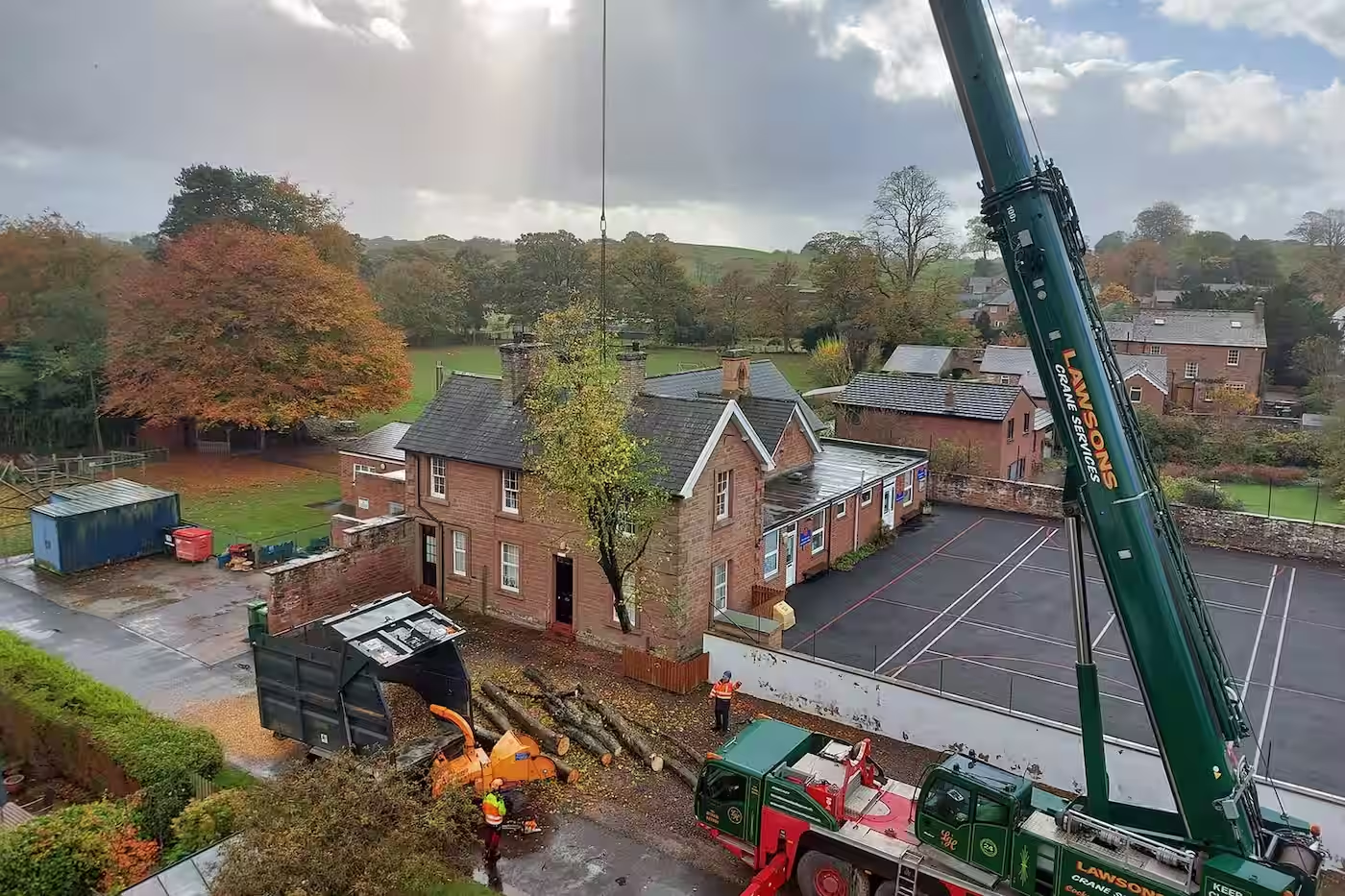
Tree felling for homeowners, landlords, farms and developers across Carlisle and Cumbria.
What's Involved
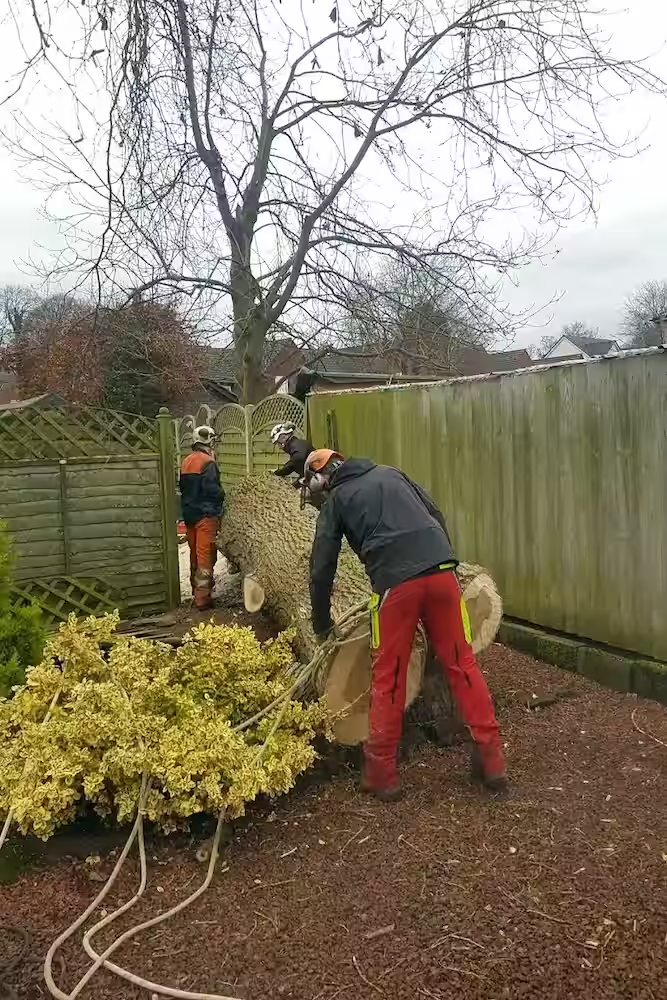
When a tree has to come down, we bring it down safely, in one piece or in sections, and clear the timber away on the day. White's Tree Services are NPTC qualified and CHAS accredited, from single garden trees to full site clearances.
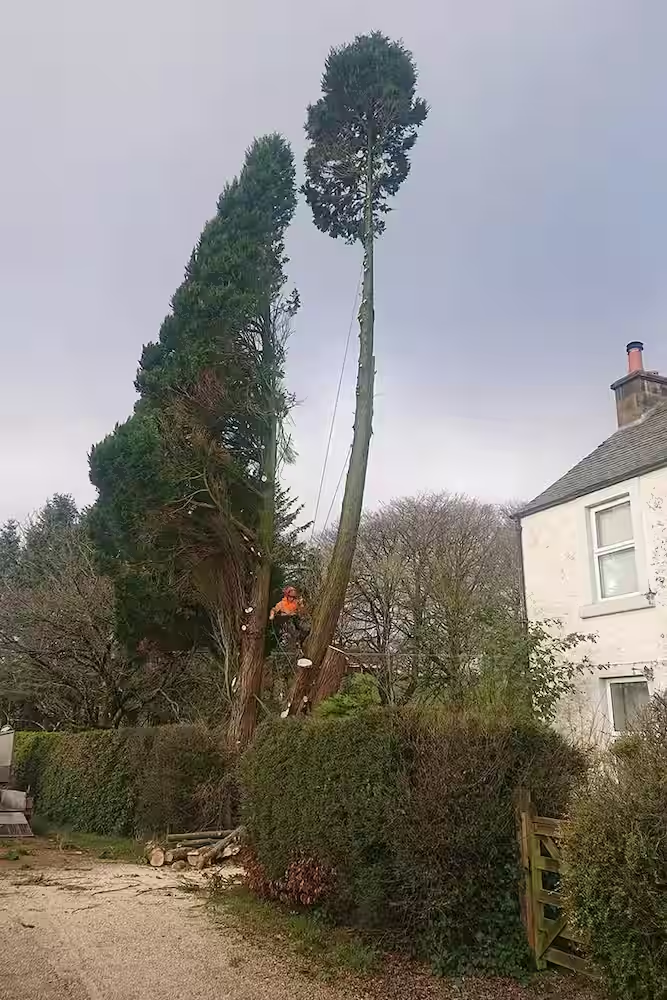
Tree felling is the complete removal of a tree at its base. Where there is room, we fell it in one. In gardens and near buildings we use sectional dismantling: the tree comes down in controlled sections with rigging and lowering gear, and nothing falls uncontrolled.
The usual reasons are dead or dying trees, storm damage, roots cracking foundations or lifting paving, trees that have outgrown their space and can't be held by pruning, and insurance claims after a storm.
NPTC certification means every operative has been assessed against the national standard for chainsaw and aerial tree work. CHAS accreditation covers health and safety, which matters to landlords, estate managers and commercial clients.
Tree felling is part of our tree surgery service. We can grind out the stump afterwards with stump grinding. If you would rather keep the tree, ask about crown reduction. A tree already down or splitting needs emergency tree removal, and for larger areas see site clearance and forestry services.
Tree Felling
Tree felling is more than cutting a tree down. Here's what it involves, who needs it, and why it matters that a qualified team does it.
The complete removal of a tree at its base. In gardens and near buildings we use sectional dismantling, lowering the tree in controlled sections with rigging. On open ground with room to spare, we fell it in one.
Homeowners with dead, diseased or dangerous trees. Landlords and property managers responding to tenant concerns or safety reports. Developers preparing a site for building. And owners dealing with roots damaging foundations, drains, paving, fences or neighbouring land.
Sometimes tree removal is the only safe or practical choice. That includes trees that are dead, dying or unstable after a storm, and trees whose roots are lifting paving, damaging drives or affecting walls and foundations.
Other trees simply outgrow their surroundings and can no longer be kept in check by pruning. Removal may also be advised where a surveyor, the council or your insurer has flagged the tree as a risk.
Tree removal is risky when done badly. Poor cuts lead to uncontrolled falls, and decayed or storm-damaged timber often reacts unpredictably as it comes apart.
A qualified team does the work safely, step by step and to industry standards. NPTC qualifications show operatives have been independently assessed in chainsaw use and tree safety, and CHAS accreditation shows recognised health and safety compliance. This matters most on commercial sites, rented homes and managed properties.
Why it matters
Trees don't give much warning before they cause a problem. Here's what tends to happen when a dangerous or diseased tree is left too long.
Dead trees shed heavy limbs without warning. You are legally liable for damage caused by a tree on your land, including to neighbouring property, cars and passers-by.
Disease moves from sick trees to healthy ones nearby. Honey fungus, ash dieback and phytophthora spread through roots and soil. Taking out an infected tree quickly limits the spread.
The roots of a declining tree keep growing. Cracked foundations, lifted paving and blocked drains are common results, and structural repairs regularly run into thousands.
A tree can look healthy and still be failing inside. Decay, root plate damage and fungal growth can't be seen from the ground without a professional check.
Insurers refuse claims when a tree was known to be in decline and the owner did nothing. Evidence that the risk was spotted and ignored will affect your buildings or liability cover.
Felling a protected tree without consent can bring a fine of up to £20,000 per tree. White's check for Tree Preservation Orders before any work begins.
What's Included
We visit, check access, decide how the tree should come down, look for Tree Preservation Orders and give you a written quote. Nothing starts until it is agreed. On the day the tree is felled or dismantled under control, the timber and brash are cleared, and we walk the site with you before we leave.
We visit before any work, check access, assess the tree and look for TPOs or conservation area rules. Written quote provided.
If the tree has a TPO or is in a conservation area, we make the application and wait for written consent before starting.
Sectional dismantling for trees near buildings or boundaries. Straight fell on open ground where it is safe. Every section rigged and lowered.
All timber and brash removed. Chipped on site where access allows. The site is left clear on the day.
The stump is cut flush with the ground as standard. Grinding it out below ground level is available as an add-on.
We walk the site with you before leaving, confirm the job is done and point out anything else worth your attention.
Testimonials
Rated 5.0 stars by customers across Carlisle & Cumbria
★★★★★
“Great Job Joe. Fast, Efficient, Clean, Very Pleasant and a good price. Thank you.”
★★★★★
“Another fantastic job done by Joe and his crew! These guys are the best. Professional, courteous and clean up after they are done! Came and dealt with our 130 foot overgrown hedges-did an amazing job! Cannot praise them highly enough.”
★★★★★
“Brilliant and professional service, great value for money, job carried out quickly, efficiently & expertly. No hesitation in recommending services, in fact already have!”