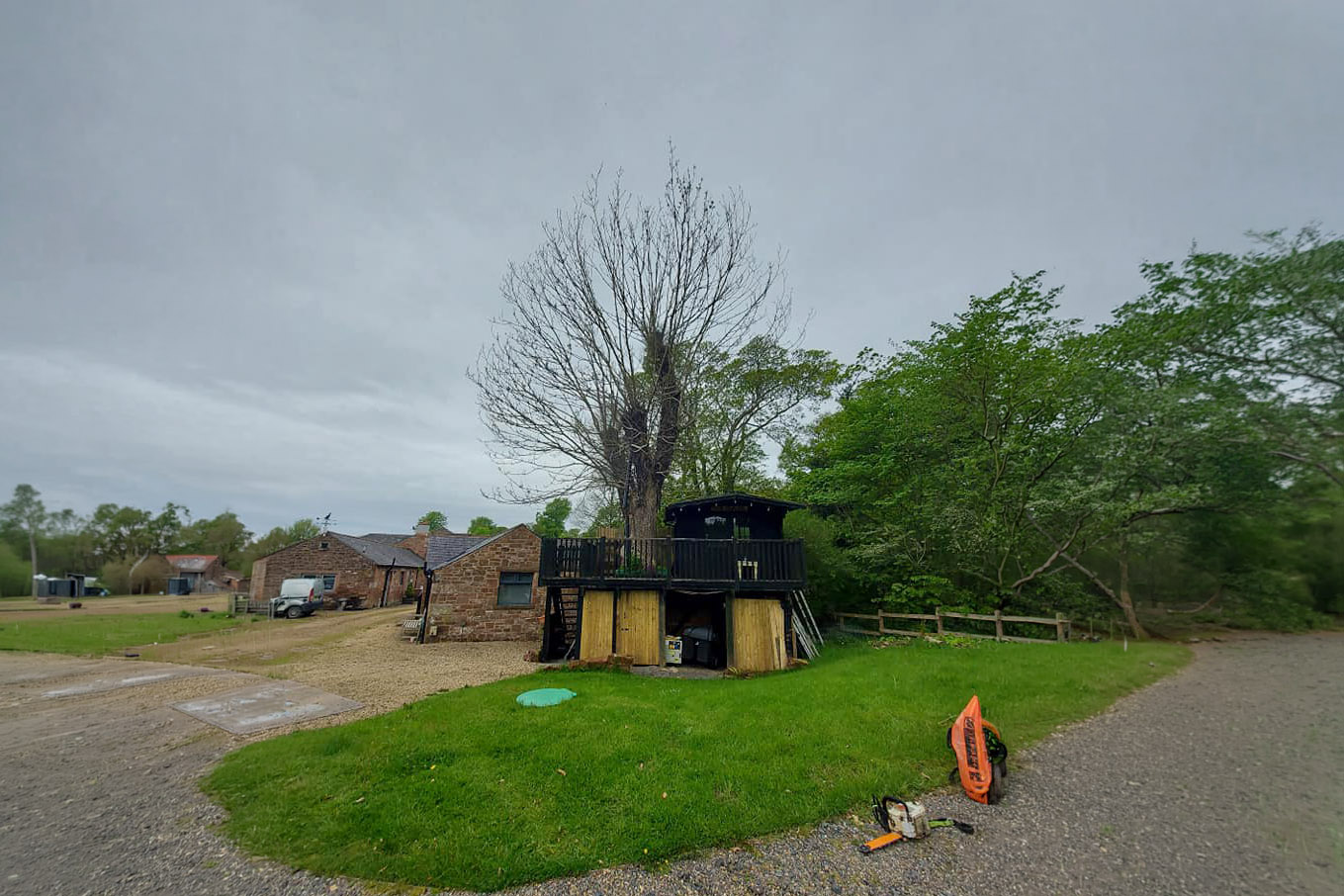
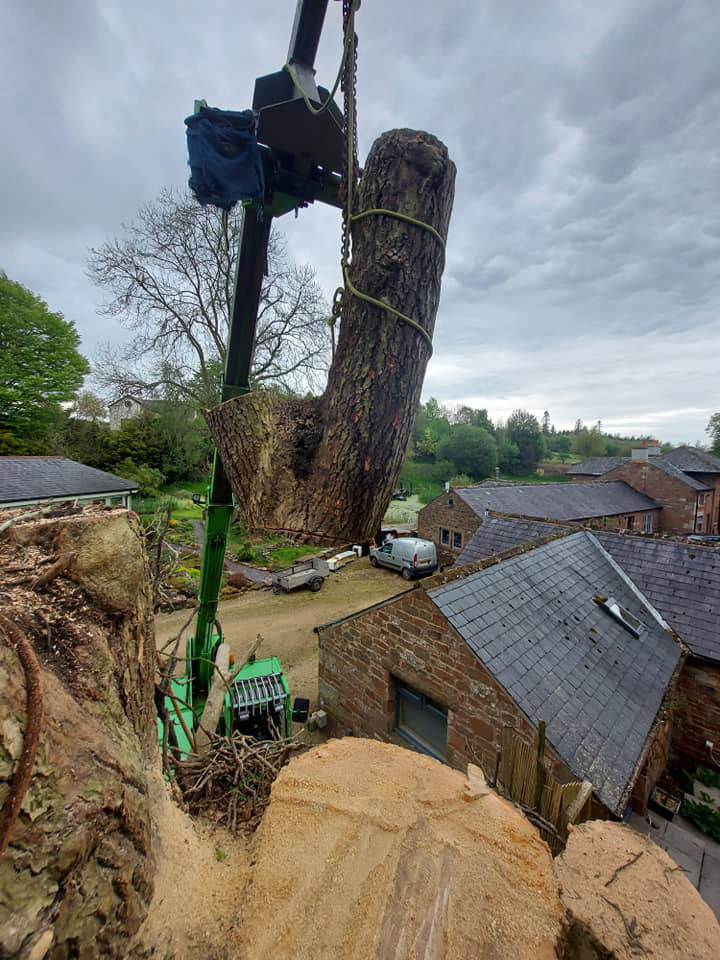
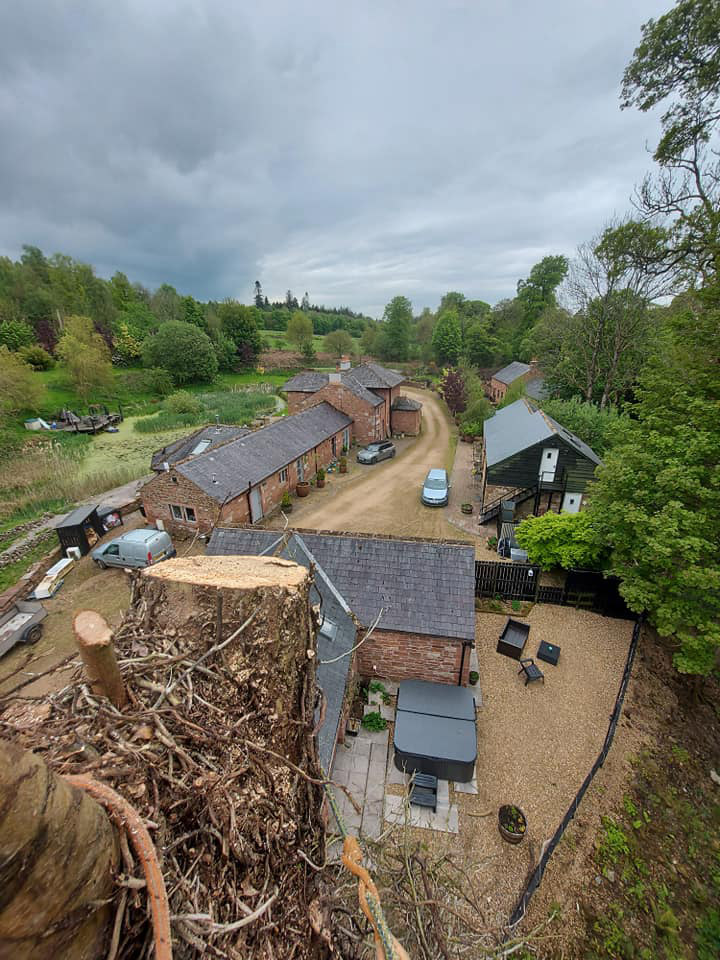
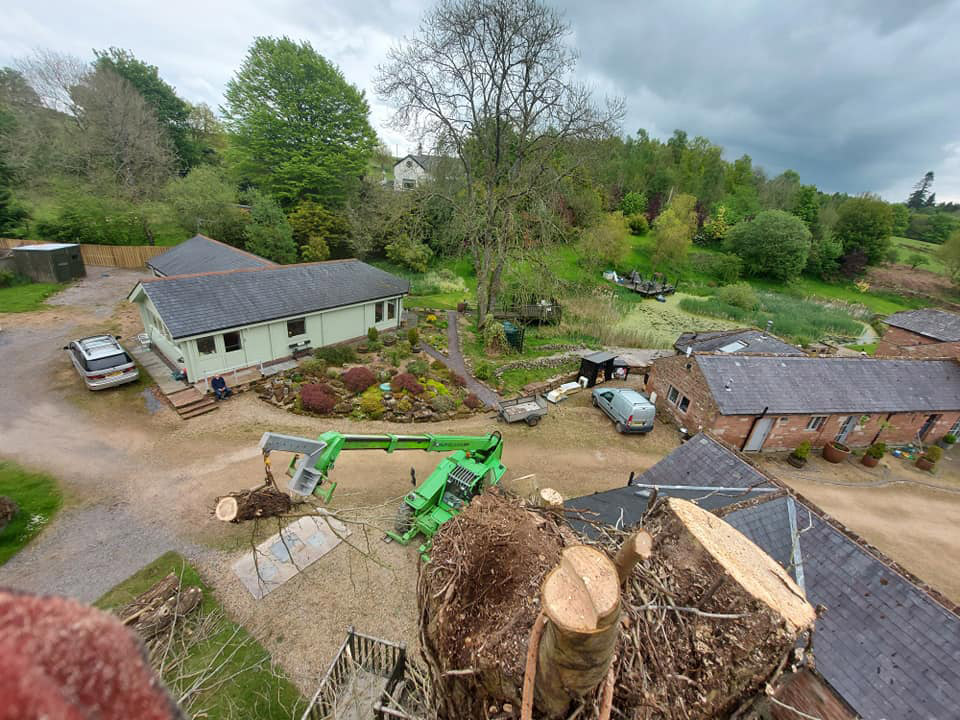
Pollarding cuts all branches back to the main trunk or a permanent framework of primary branches, known as the pollard head. New shoots grow from these points each season and are managed on a regular cycle, typically every one to three years depending on species. It’s not a one-off job. Once a tree has been pollarded, that cycle has to be maintained.
Common reasons include trees that repeatedly outgrow their space and can no longer be managed through pruning alone, trees near buildings or power lines that need to be kept at a fixed height, and species such as lime, willow and plane that grow vigorously and suit cyclical management. It’s also used to restore previously pollarded trees that have been left to overgrow.