Branches Drop Without Warning
Dead branches fall on calm days as well as stormy ones. Once the joint dries out and can no longer hold the weight, the branch comes down. You can't predict when from the ground.
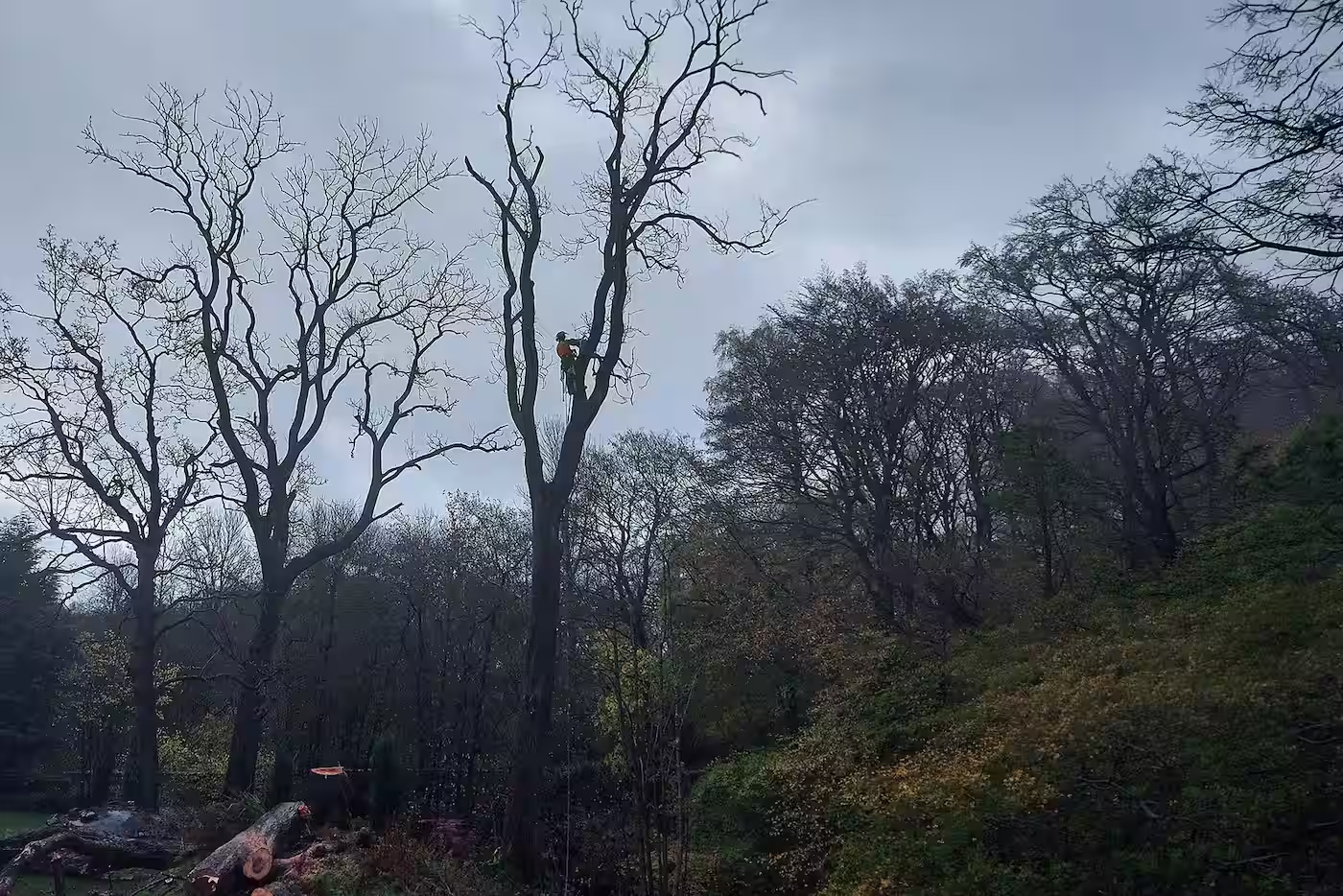
Dead wooding for homes, landlords and sites where people pass under mature trees.
What to know
Dead branches fall without warning and weigh more than most people expect. White's are NPTC qualified and CHAS accredited, and we take that wood out before it comes down on its own.
What is Dead Wooding?
Dead wooding is the removal of dead, dying and broken branches from a tree's canopy. It is one of the simplest ways to cut the risk a mature tree poses to people and property, and most jobs are done in a single visit.
The work is usually set by a minimum branch size, for example all deadwood over 25mm. Every cut is made at the natural branch collar, with no stubs left. Stubs rot back into the tree and cause new problems. Done properly, the tree seals each wound and the result lasts several years before the next check.
Dead wooding is part of our wider tree surgery service. It pairs well with crown reduction or general tree pruning on the same visit. If a large limb has already split or come down, call us about emergency tree removal.
Dead Wooding
Dead wooding is more than pulling out a few loose branches. Here's what it involves, who needs it, and why it matters that it is done properly.
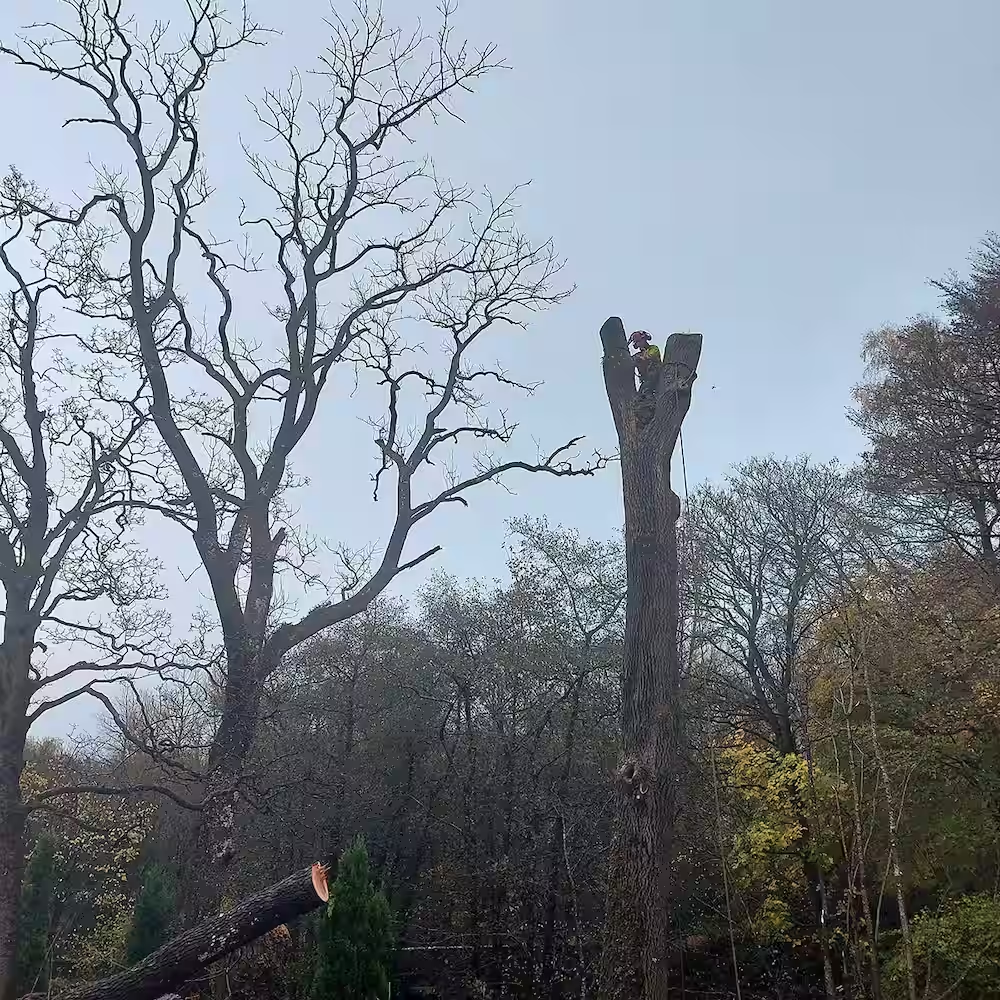
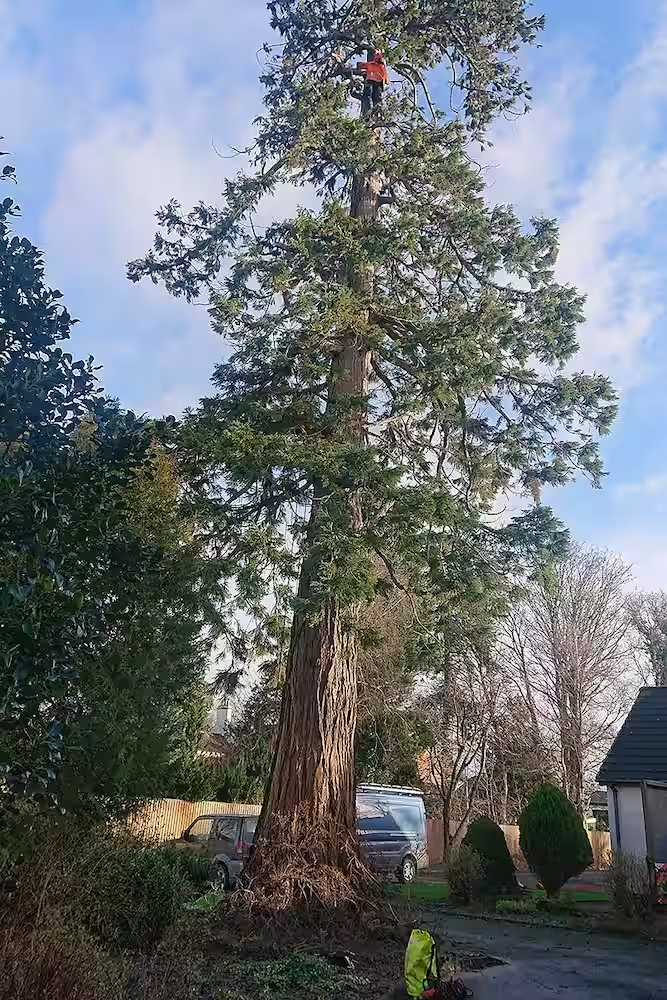
The systematic removal of dead, dying and broken branches from the canopy. A climber works through the crown, finds every branch over the agreed minimum size and cuts each one at the collar, where the tree can seal the wound.
Homeowners with mature trees over drives, cars, conservatories, fences or sheds. Landlords and property managers with trees over footpaths or shared areas. Schools, estates and commercial sites where people walk under trees every day. And anyone who has had a branch drop and wants the rest checked before it happens again.
Late autumn to early spring is best, when the leaves are off and dead branches are easy to see. Urgent dead wooding can be done at any time after a storm, a branch drop or a risk inspection.
Sparse or bare patches in the crown, dead twigs showing when the tree is in full leaf, or fungal brackets on the trunk are all signs the tree needs looking at.
A dead branch doesn't need a storm to fall. It drops when its own weight is more than the dried-out joint can hold. Owners have a legal duty of care for trees on their land, and insurers often refuse claims where deadwood was visible and left.
The cost of the work is small next to the cost of a branch landing on a car, a roof or a person. It needs a climber working through the canopy, not someone with a pole saw from the ground.
Why it matters
Deadwood doesn't stay put. It builds up, and so does the risk. Here's what tends to happen when dead branches are left in a tree too long.
Dead branches fall on calm days as well as stormy ones. Once the joint dries out and can no longer hold the weight, the branch comes down. You can't predict when from the ground.
Deadwood is taken over by decay fungi. Left in the canopy, the fungi spread back into live wood and start to hollow the tree from inside. A branch that could have been cut out becomes a structural problem.
A mid-sized dead branch falling from height can damage a roof, write off a car or put someone in hospital. The longer it is left, the more unstable it gets as it dries and decays.
Owners are responsible for the trees on their property. If deadwood was visible and nothing was done, that is hard to defend. A written record of inspection and work done protects you.
Loss adjusters look for signs that a risk was known and ignored. Visible deadwood in a tree that later causes damage is exactly that. A dead wooding visit costs far less than an insurance dispute or an uninsured repair.
The more deadwood builds up, the bigger the job becomes. Trees checked and cleared on a regular cycle are quicker and cheaper to look after than ones dealt with after something has gone wrong.
What's Included
First we inspect the tree, agree the minimum branch size, check for Tree Preservation Orders and give you a written quote. Nothing starts until it is agreed. On the day a climber works through the canopy, branches are lowered safely, everything is cleared away and we walk round the site with you before we leave.
We inspect the canopy from the ground and from height, marking every dead, dying and broken branch over the agreed size before any cutting starts.
We check for Tree Preservation Orders and conservation area rules before work begins. If consent is needed, we make the application and wait for written approval.
A climber works through the canopy, cutting each branch at the natural collar. No stubs left. All work to BS 3998.
Branches are rigged and lowered in sections where needed. Cars, planting and greenhouses below are protected throughout.
Everything removed is cleared on the day. Brash is chipped on site where access allows. The site is left clear before we go.
We walk the site with you, confirm the work is done, and point out anything else in the tree worth keeping an eye on.
Testimonials
Rated 5.0 stars by customers across Carlisle & Cumbria
★★★★★
“Great Job Joe. Fast, Efficient, Clean, Very Pleasant and a good price. Thank you.”
★★★★★
“Another fantastic job done by Joe and his crew! These guys are the best. Professional, courteous and clean up after they are done! Came and dealt with our 130 foot overgrown hedges-did an amazing job! Cannot praise them highly enough.”
★★★★★
“Brilliant and professional service, great value for money, job carried out quickly, efficiently & expertly. No hesitation in recommending services, in fact already have!”